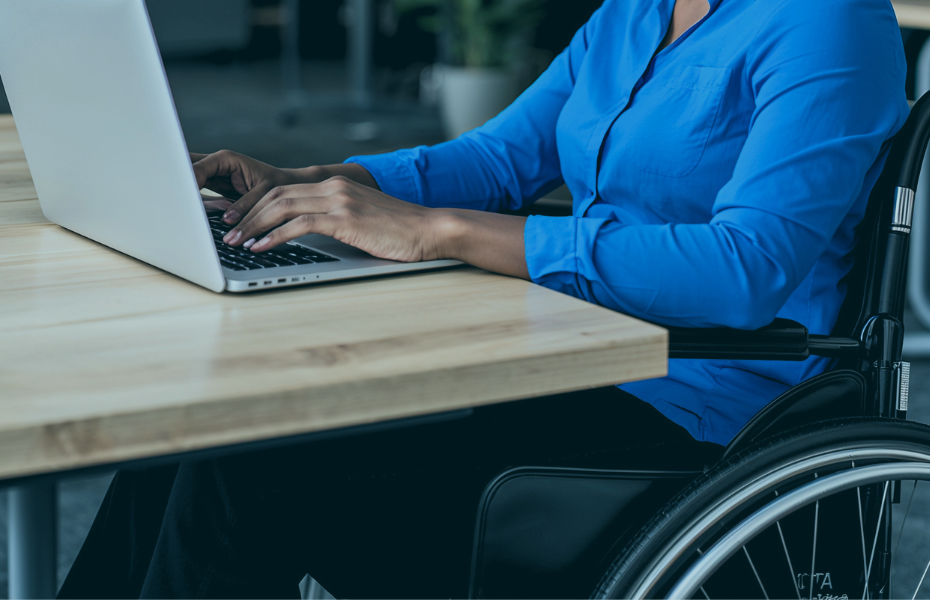
On the additional burden of moving through physical spaces, and why hybrid work changed the calculus but not the cost.
Using a wheelchair at work isn’t just about physical access. It’s about the daily negotiations with physical space, with other people’s attitudes, with systems that weren’t designed to accommodate wheels. It’s about a kind of labour that doesn’t look like work but never stops.
In the office, it means: Is the entry accessible? Can I actually get to my desk? Are the bathroom facilities usable? Is the canteen layout something I can navigate? Can I sit at the table for meetings, or am I positioned at the end? Can I reach the things on shelves, the coffee, the supplies? Each of these is something someone in a wheelchair has to think about. Most colleagues don’t.
Hybrid Work as Liberation and Complication
Hybrid work changed some of this. Working from home meant not having to negotiate the office. No worrying about accessible bathrooms. No managing energy used up on navigating space. No performance of normalcy on top of work. For some wheelchair users, hybrid work was genuinely liberating.
But it created a different problem: visibility. If you’re working from home and colleagues never see you, they might forget you’re disabled. They might not understand why your presence in person looks different. They might resent you for not being in the office when everyone else is expected to be.
And hybrid work doesn’t solve the fundamental problem: travelling for work. If your organisation expects you to attend conferences, to travel to clients, to come in for all-hands meetings, that travel is where wheelchair users face some of the biggest barriers.
The Labour of Travelling
Wheelchair users trying to travel for work do labour that most colleagues don’t. They have to book accessible accommodation themselves, because generic booking systems don’t reliably indicate what accessible means. They have to research venue accessibility, call places, ask questions, verify that the information is actually correct.
They have to arrange transport differently. Not public transport if it’s not accessible. Taxis if they can be accessed, or adapted vehicles, or personal assistance. They have to plan time differently. They can’t just hop on a train. Everything takes longer, costs more, requires planning that colleagues don’t have to do.
And they have to live with the risk of access fails. They show up and the venue isn’t actually accessible like they were told. The lift breaks and the conference is on the second floor. The hotel accessible room isn’t. The promise of accessible parking is empty. These failures aren’t just inconvenient. They mean someone can’t participate in the thing they travelled to participate in.
And throughout all of this is the emotional labour of managing other people’s responses. The pity. The assumptions that they shouldn’t be travelling, that it’s too hard. The people who want to help in ways that are unhelpful. The people who make it about their discomfort with disability rather than the actual needs.
The Etiquette That Matters
Don’t touch someone’s wheelchair without asking. It’s their personal space. Don’t patronise. ‘How inspiring you’re still working!’ isn’t a compliment. It’s an assumption of tragedy.
Do make sure venues are actually accessible. Not just claiming accessibility. Actually check. If something isn’t accessible, work with the wheelchair user on solutions before asking them to attend. Don’t make them show up and problem-solve on the day.
If you’re asking someone to travel, assume they’ll need support with accessibility. Not special support, just a realistic acknowledgement that wheelchair users travelling need to know: Is the hotel accessible? Is there accessible parking? Are there accessible bathrooms at the venue? Are there ramps? These aren’t special requests. They’re basic information.
And most importantly: if a wheelchair user says they can’t attend something because it’s not accessible, believe them. Don’t suggest ‘it might be fine,’ or ‘let’s see.’ They’ve done the assessment. They know. If you want them there, make it accessible.